
Can you stack a black mist and a polarizer?
Yes. I do it on the Lumix GH7 when a river wants cleaner water and morning sun makes digital highlights look like razor blades. The polarizer cuts glare off wet river stones; the mist blooms the blown sky just enough to stop it looking synthetic.
I'm Leo Liang. I design filters at XT Filters and shoot an OM SYSTEM 12–40mm f/2.8 on the GH7 (62mm thread). It is a compact kit, and I only stack when both filters earn a seat. Most days, they do not.
The order that works: mist first, CPL outside
Diffusion is passive, screw the black mist on finger-tight, and leave it alone. A circular polarizer is active; you constantly rotate the front ring as the light changes. That is why the order matters: mist goes closest to the lens, CPL goes on the outside.
Try reversing that order once. Light still reaches the sensor, but the moment you adjust polarization, you are pinching a spinning CPL collar trapped behind the mist frame. You fumble with cold fingers, bind the rings, or unscrew the entire stack into the dirt. Put mist against the glass, tighten it finger-tight, and thread the CPL on front. That leaves the outer ring free to spin with one finger while keeping your eye on the finder.
Three problems you have to watch for
Stacking is never free. When you stack black mist and CPL filter rings, you bolt two aluminum collars and two extra pieces of glass onto the barrel. Three things go wrong fast.
First is vignetting. Two frames turn the front of your lens into a tunnel. On my 12–40mm at the 12mm wide end (24mm equivalent), two stacked standard frames immediately shade the corners. Stopping down might soften it, but on wide zooms, the metal rims simply clip the field of view. Before hiking out, I aim at open sky at my widest setting, shoot a test frame, and check corners at 100%. If they are clipped, I zoom in slightly or pull one filter off.
Second is bind-up, the headache that makes people swear at aluminum rings in a gravel parking lot at dusk. You thread two warm filters together in the car, hike into cool damp air, and thirty minutes later they feel welded shut. The outer ring will not budge, or the inner filter backs off the lens instead.
When filters bind, never pinch the rims between thumb and forefinger. Squeezing a ring at two points flexes thin aluminum into an oval, jamming threads tighter. Instead, press the flat filter face against a rubber lens wrench, the rubber sole of your boot, or wrap a wide rubber band around the outer rim. Never put oil or WD-40 on threads; grease migrates to glass and turns trail dust into grinding paste.
Third is the lens hood. Factory bayonet hoods mount with millimeters of clearance. Add two filter frames and the stack sits proud. The hood will not clear the rings, perches crooked, or refuses to lock. Ditching the hood leaves you open to off-axis light. On a mist filter, which already blooms highlights, shooting without a hood can wash out your entire frame with low-contrast haze.
When not to stack
I leave one filter in the pouch far more often than I stack them.
Shooting night streets under harsh LED lamps? Take the CPL off. A polarizer does nothing useful in flat artificial night light, and that extra piece of glass just bounces green ghost flares across the frame. Shoot mist alone.
Shooting midday landscapes where you need deep shadows and rich color saturation? Leave mist in the bag. Adding diffusion bleaches your dark tones and fights the crispness you bought the polarizer for.
Water glare alone: CPL. Bloom on lights alone: mist. Stacking both just because you packed both is how bags get heavy and corners get dark. Stacking belongs only on frames where you genuinely need both jobs at once: cutting reflective glare while softening harsh specular highlights. Neither effect can be faked in software; read what Lightroom still can't fake with polarizers and black mist.
What goes on my lens when the shot earns it
When a frame genuinely demands both effects, low-profile frames are non-negotiable.
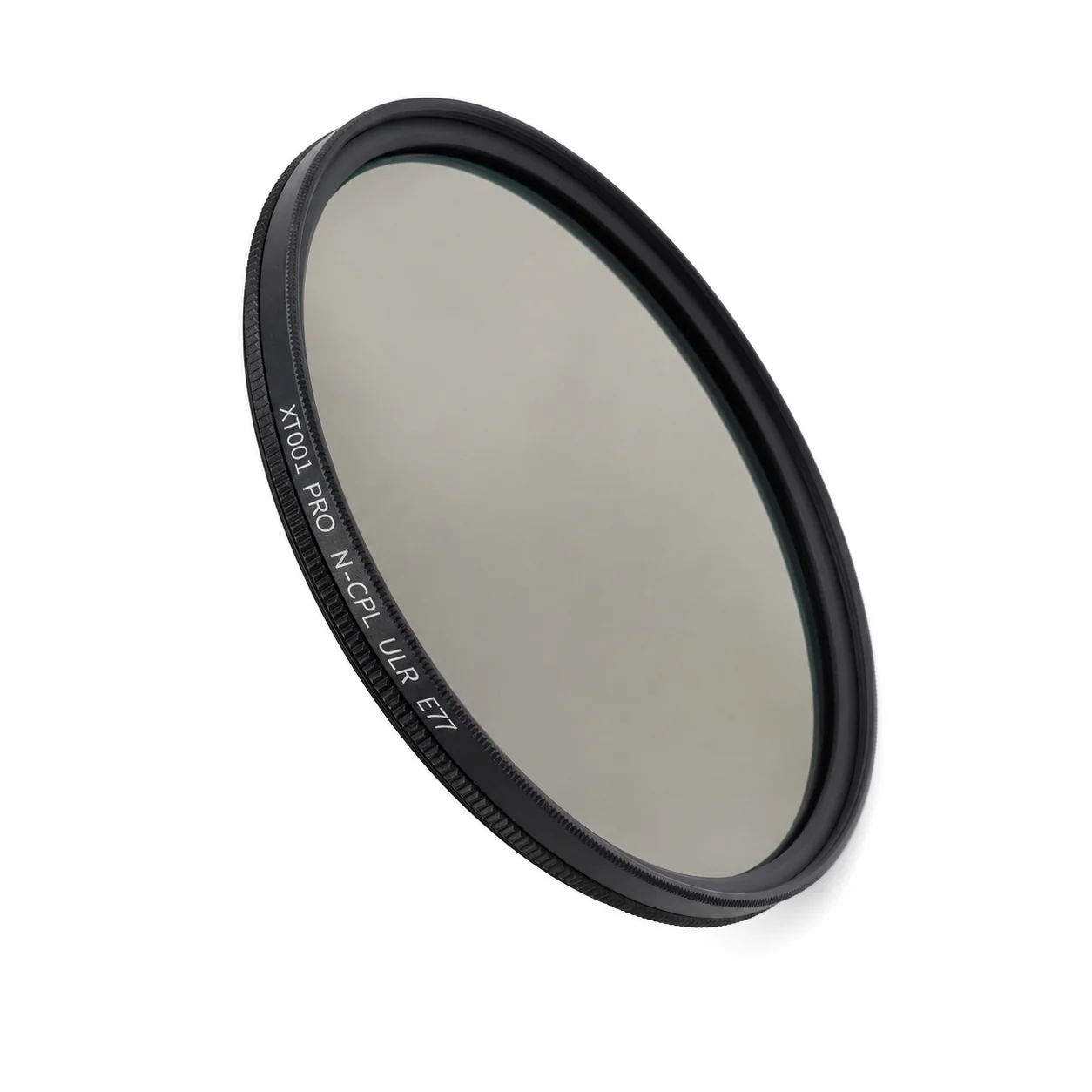
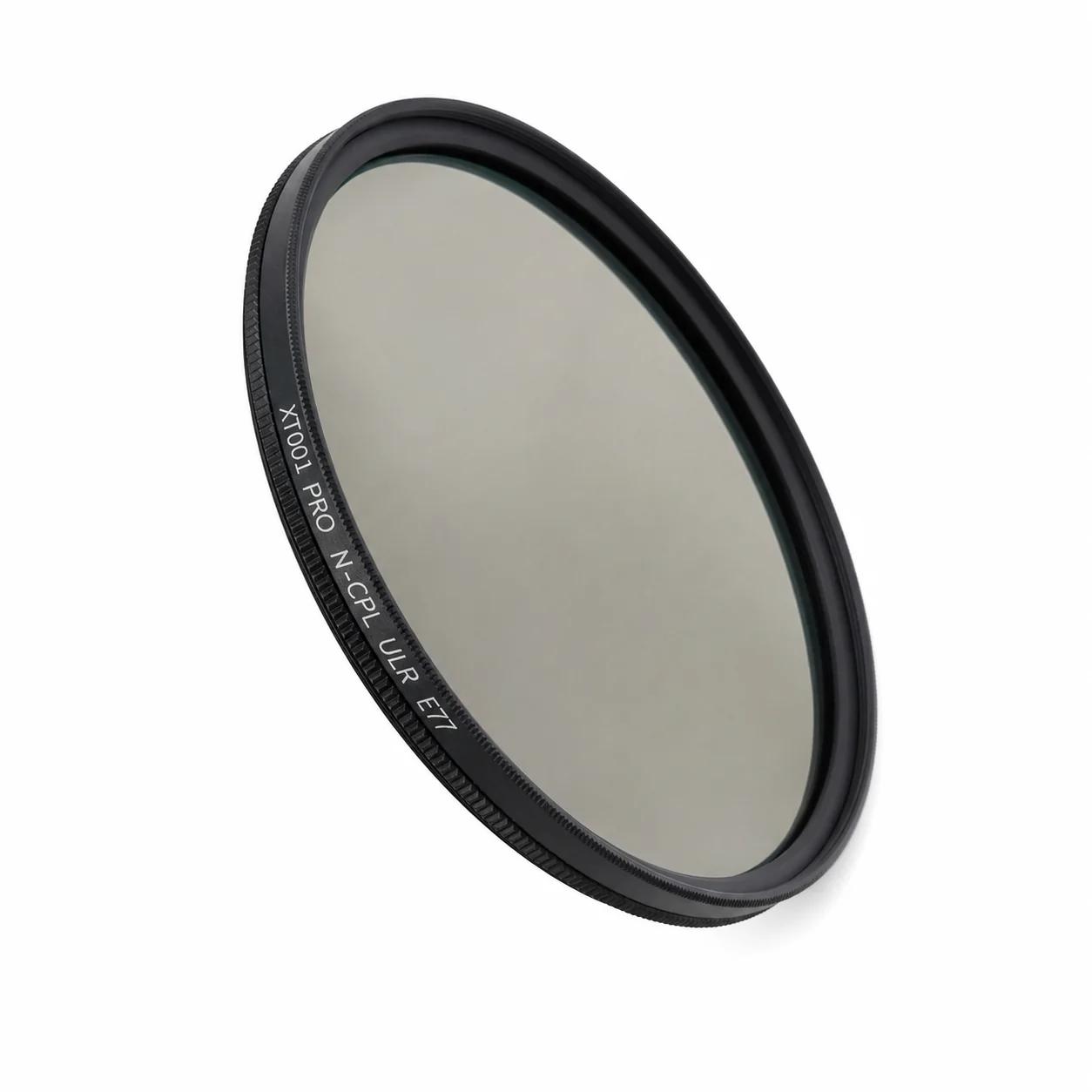
On the outside, I screw on the XT001 PRO CPL. The frame is slim, and the rotating ring turns smoothly without dragging the rear filter with it. If you want a simpler setup, remember you don't need a flagship CPL to cut surface glare.
Directly on the lens, I run the XT888 Bottom Black Mist 1/4. It is the black mist strength you can leave on all day because it takes the brittle edge off digital sensors without drowning the scene in fog. If a project calls for a different diffusion profile, the XT925 is in the same family.
Match both filters to the millimeter thread size etched next to the Ø symbol on the front of your lens, 62mm on my Lumix zoom, or 49mm, 67mm, 77mm, 82mm on yours. Never buy by focal length.
If you keep a clear protective filter on your lens, unscrew it before mounting this pair. Three filters guarantee vignetting on almost any wide glass. If you work in blowing salt spray and need a sacrificial base layer under the mist, a razor-thin glass like the XT995PRO L39 can sit against the barrel, provided your lens still clears the corners. Most of the time, leave the UV filter in the pouch. Two pieces of working glass are plenty.
Shop a mist and a CPL in your lens thread size (the XT001 PRO runs 43–95mm, the XT888 Bottom 1/4 39–105mm) if that is the combination your shooting actually calls for. Keep it finger-tight, keep the polarizer outside, and when your corners start to darken, drop one filter back into the pouch.
· Leo Liang