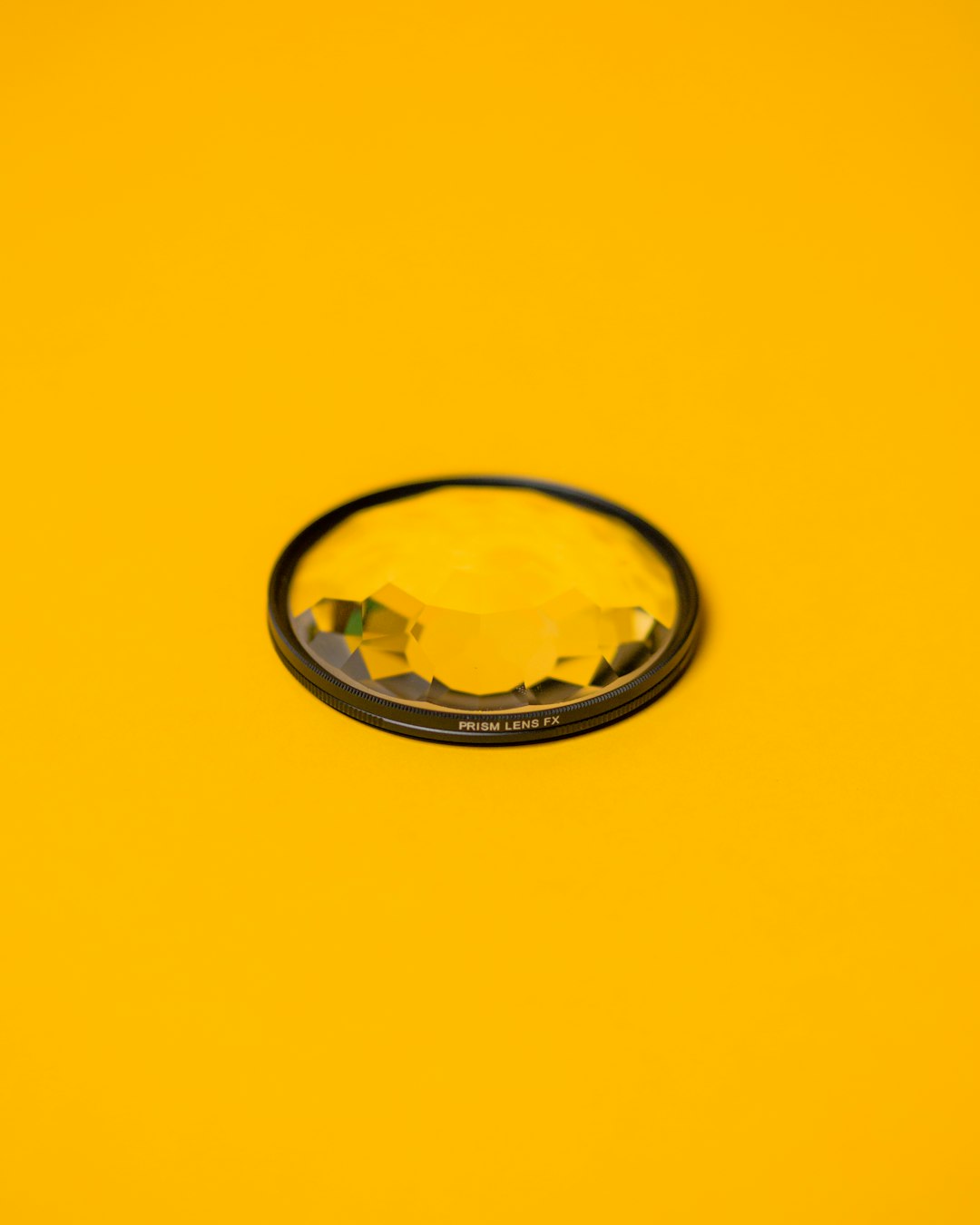

If a friend grabbed my arm in a camera store parking lot and asked whether there is a black mist filter you can screw on in the morning and leave on all day, my answer is simple: yes. Buy a 1/4.
Not 1/8. Not 1/2. You want a 1/4.
Most photographers treat diffusion like a party trick. They buy a heavy mist filter, take it out for one rainy night walk under neon signs, get overwhelmed by huge glowing halos wiping out their contrast, and bury it in a drawer. Or they swing to the other extreme, follow the common industry habit that defaults to 1/8 as the safe always-on choice, and spend the afternoon squinting at their rear LCD wondering if the glass is doing anything at all.
A black mist 1/4 everyday filter hits the working line where the image actually changes without turning your afternoon street walk into a foggy dream sequence.
The line between invisible glass and a fog machine
The photo industry often treats 1/8 as the default always-on mist strength. I understand the instinct. With 1/8, it is almost impossible to get into trouble on a commercial job. But out on the street, 1/8 is so polite that under midday sun or flat overcast skies, it practically disappears. You get almost no highlight roll-off and no real bloom around reflective hot spots. You bought diffusion, but you are looking at clear glass.
Jump to 1/2, and you run into the opposite ditch. Street lamps turn into giant smudges of white butter, dark jackets wash out into milky gray, and daytime skin looks smeared. It is a striking special effect when you want heavy drama, but it will ruin an ordinary walk.
A 1/4 strength finds the balance. Skin still looks like skin. Pores, eyelashes, and fine textures stay sharp, while that harsh, biting digital edge from modern sensors softens up. When hard light strikes a forehead, a chrome bumper, or an exposed light bulb, the highlight blooms just enough to roll off smoothly. It is a gentle halation, not a fog machine.
Two bodies, one thread, and the adapter trap
Where people run into practical misery with an all-day filter is rarely the optical formula. It is the thread.
The two cameras where photographers most want an always-on mist setup are fixed-lens street companions: the Leica Q3 43 and the Fujifilm X100 series. Both run 49mm filters, yet both cause endless parking-lot fights.
On the Q3 43, people see "43" engraved on the barrel, assume it is the thread size, and buy a 43mm ring. Then they stand by their car with cold fingers, trying to thread it on, while the ring rattles loose against the front bezel. The 43 is the focal length. The thread is E49.
On the Fuji X100, there is no exposed thread out of the box. If you try to screw a filter directly onto that nose without removing the front trim ring and mounting an adapter first, you will cross-thread the barrel. You need the adapter ring, and that adapter takes 49mm.
On my Lumix GH7 with the Olympus 12–40mm II, I have sloppy habits. I can manhandle filters in a hurry, twist a bayonet hood over them, and move along. But compact bodies have zero tolerance for mismatched rings. A thick, generic aluminum frame can fight the hood, pinch the outer rim, or cause a twisted-dead bind-up where two cold metal surfaces freeze solid halfway through a turn. Always verify the little ø mark on the lens or adapter before buying.
What real frames show in the field
I do not judge mist filters by shooting test charts against a studio wall. Field reality is messy, and that is where diffusion earns its keep.
We are currently shooting side-by-side portrait proof sets—clean frames taken with and without a 1/4 black mist under real daylight. No synthetic AI mockups, no digital filter sliders. Just actual glass in real light.
What I watch for in those frames is how contrast behaves when light gets hostile. When harsh midday sun hits someone's forehead or a bare bulb hangs in a coffee shop window, an unfiltered digital sensor creates a sharp, abrasive cliff between the highlight and the midtones. With the 1/4 in place, that transition softens into an organic roll-off. At the same time, deep shadows under a dark coat collar stay anchored in solid black instead of drifting into milky gray haze. You keep your contrast floor, but you lose the sterile digital punch.
Why standard focal lengths need a dedicated cut
Focal length changes how mist behaves. When you shoot past 135mm on a telephoto lens, the narrow field of view magnifies diffusion particles, making a moderate filter look twice as dense and muddy.
That is why we tuned our XT888 Bottom 1/4 specifically for standard and wide focal lengths under roughly 135mm. It is built for everyday street, documentary, and portrait glass—the 28mm, 35mm, 43mm, and 50mm setups that spend all day on your shoulder.
We make stronger Top mist options for heavy atmospheric scenes, but stronger Top mist is not an everyday all-day filter. It is an intentional, heavy look for specific shoots. For a piece of glass you can leave on from morning coffee until the streetlights flicker on at night, the XT888 Bottom 1/4 is the sweet spot.
Check the ø mark on your lens or adapter, and pick up the XT888 Bottom 1/4 in your millimeter.
— Leo Liang
Shop our filters
Explore the full XT filter collection — CPL, black mist, UV and lens protection for photographers who demand clean color.
SHOP NOW →