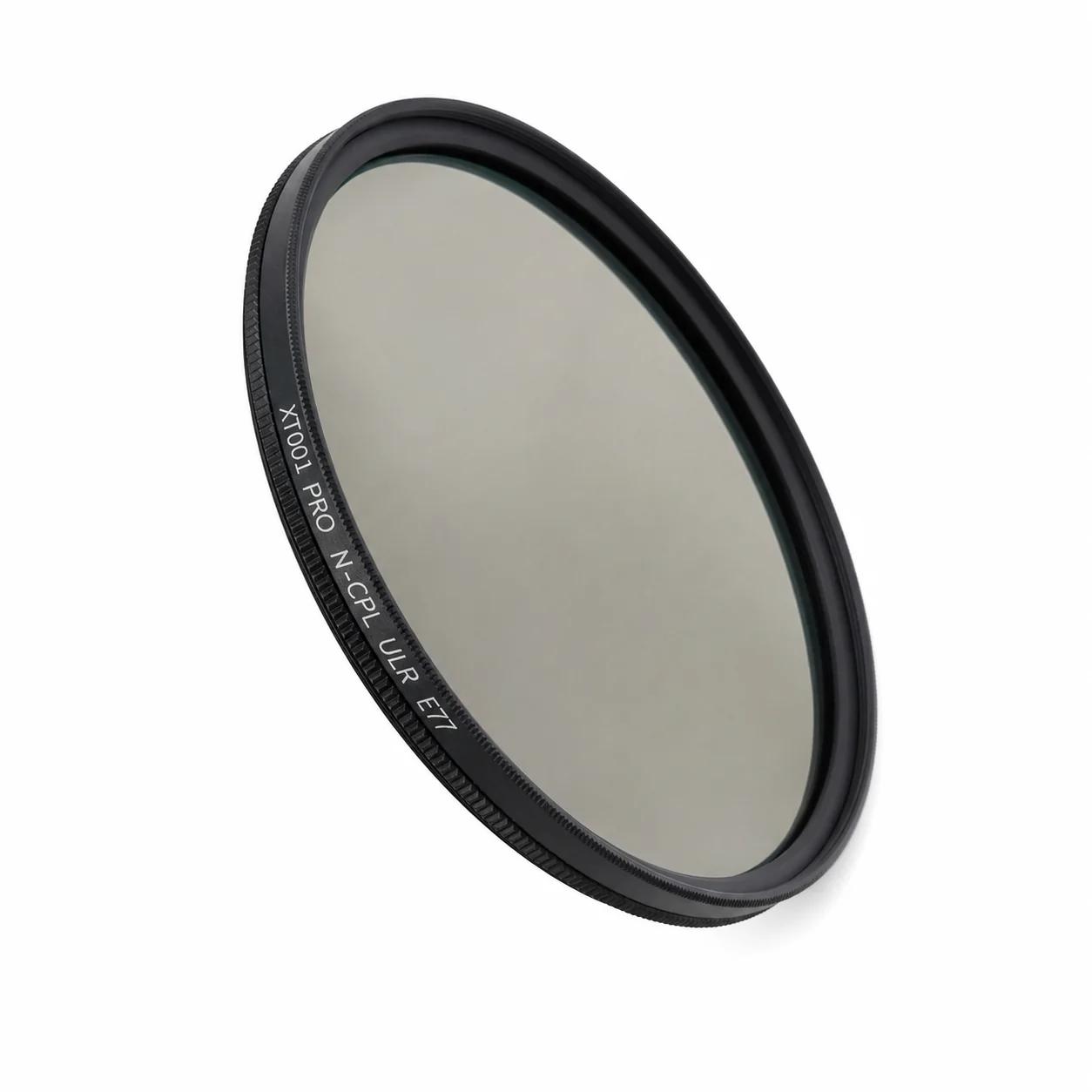
Can you leave a circular polarizer on your lens all day?
The short answer is no. Do not do it.
Every few weeks, someone asks me if they can simplify their bag by threading a circular polarizer (CPL) onto their front element in the morning and just leaving it there until nightfall—using it as a combination polarizer, daylight filter, and front-element guard. It sounds convenient on paper: one less filter in your pocket, protection for your front glass, and saturated colors whenever you lift the camera.
In practice, leaving a polarizer on as an everyday walkaround filter will ruin more frames than it saves.
A circular polarizer is an active, task-specific optical tool. It is not a set-it-and-forget-it protector. Here is why keeping one screwed on all day works against you, when you should actually reach for it, and what filter to use if you genuinely want something that stays on your lens from morning to night.
1. The Light Penalty (Even in Daylight)
The first issue is exposure. A circular polarizer functions by using specialized polarizing film—in our XT001 PRO, for example, we use Japanese Nitto polarizing film cemented between optical glass—that blocks light waves vibrating in specific orientations.
Because it physically screens out non-parallel light vibrations, a polarizer acts like a permanent neutral density filter. Even when you rotate the ring to its point of minimum polarization, the filter glass still eats roughly 1 to 1.5 stops of light. At maximum extinction, that light loss easily pushes toward 1.5 to 2 full stops.
On a bright sunny beach at midday, two stops of light loss might not sound catastrophic. But the moment you turn a corner into a shaded alley, step under a tree canopy, or walk into a subway station, that two-stop penalty hits hard:
- Your camera is forced to push its ISO from 400 to 1600 or 3200, introducing sensor noise and reducing dynamic range.
- Or your shutter speed drops from a crisp 1/250s down to 1/60s, risking motion blur on moving subjects.
- In low light or indoors, the polarizer does literally nothing beneficial—there is no atmospheric glare or open water to cut—while starving your sensor and autofocus system of light.
If you are carrying your camera for documentary, street, or travel work, you are paying a permanent exposure tax for zero benefit during 80% of your day.
2. Uneven Skies and Accidental Ruined Shots
A polarizer’s effect is completely dependent on your angle relative to the sun. The maximum polarization effect occurs strictly at a 90-degree angle from the sun’s rays.
When you leave a CPL on while walking around:
- Every turn requires a twist: If you turn 90 degrees to shoot down a cross street, the orientation of polarized light shifts completely. If you do not pause to adjust the rotating front ring, your polarization will be misaligned, giving you flat glare or unwanted reflections.
- The wide-angle wedge: If you shoot with a wide lens (wider than about 28mm on full frame, or 14mm on Micro Four Thirds), the lens’s field of view is wider than the sky’s 90-degree polarization band. If the CPL is on, you will get an unnatural, dark blotch across one portion of the sky while the edges remain pale. If you are taking quick snapshot frames while walking, you will accidentally bake that blotch into frames you cannot rescue in post.
A polarizer requires active visual inspection through the viewfinder on almost every composition. If you treat it like passive glass, it turns into an unpredictable variable.
3. When to Actually Twist It On
None of this means a circular polarizer isn't essential. It is one of the only optical filters whose effect cannot be faked in Lightroom, Capture One, or Photoshop. Software can adjust blue saturation or contrast, but it cannot see through surface reflections to the riverbed beneath, and it cannot recover color washed out by white glare reflecting off wet leaves.
You should reach into your pouch, thread the CPL on, and dial the ring in three specific situations:
- Water and Wet Surfaces: Looking into a stream, shooting wet rocks along a shoreline, or cutting glare off a lake to reveal underwater texture and stones.
- Glass and Windows: Eliminating or controlling reflections when shooting storefronts, architecture, or interiors through glass.
- Foliage and Distant Haze: Stripping the white, waxy sheen off leaves in forests or damp landscapes, bringing back rich natural greens that no saturation slider can replicate cleanly.
Once you finish shooting that water or architecture scene, unscrew the filter, drop it back in its case, and carry on.
4. What Filter Actually Stays On All Day?
If your goal is to keep a single filter on your lens so you never have to worry about swapping glass while walking, you have two real options depending on what you want:
- For pure protection: A dedicated clear protector or multi-coated UV filter like the XT996S. It has near-zero light loss (under 0.1%), zero directional banding, and lets you wipe away dust, salt spray, or fingerprints without babying your front element. That is what I leave on my daily walkaround setup.
- For character and film-like highlights: A subtle black mist filter. If you want a creative filter that stays on from morning through night, a 1/4 strength mist—such as our XT888 Bottom 1/4—is designed for everyday use. Unlike a polarizer, a 1/4 mist does not eat your shutter speed (our XT888 Bottom maintains ≈88.8% transmission), does not create uneven skies, and does not depend on sun angles. During the day it slightly takes the clinical edge off modern digital sensors; at night it blooms streetlights into soft, organic halos.
The Bottom Line
A circular polarizer is a precision tool, not a lens cap.
Keep your CPL in your pocket or a quick-access pouch. When you find water, glass, or glare that demands it, take the fifteen seconds to thread it on, rotate for the look you want, and make your frame.
When you move on, take it off. Your shutter speed, autofocus, and wide-angle skies will thank you.