If you're stuck between a 1/8 and a 1/4 black mist and what you want is that soft, slightly filmic glow around highlights, start with the 1/4. That's also the only strength XT Filters makes, so take this with that bias in view. I'll explain why we stopped there instead of offering both.
What the fraction actually changes
Black mist glass has a fine diffusing layer in it. The fraction is a density grade: a 1/8 scatters less light than a 1/4, which scatters less than a 1/2. Scattered light goes two places. Some of it spreads out from bright points (lamps, sun glints, specular highlights on skin) and that's the glow people are paying for. The rest lifts the darkest parts of the frame a little, which is where the "cinematic" contrast comes from, and also where it can go wrong.
So the question isn't really 1/8 or 1/4. It's how much of that halo and shadow lift you want to see before you start fixing it in the edit.
Why 1/8 disappoints a lot of first-time buyers
A 1/8 is a careful grade. On a film set with controlled lighting, a cinematographer can see it working on a monitor and build the rest of the look around it. For a stills shooter or a solo video shooter checking a rear screen outdoors, it is often hard to tell it's on. Bright overcast, flat midday light, scenes without strong point sources: the effect is easy to lose.
That is the most common way a first black mist ends up in a drawer. Not because it ruined anything, but because the owner couldn't see what it was doing and stopped bothering to screw it on.
A 1/4 is the point where most people can actually notice the change on a normal day, while blacks still mostly stay black. If you later decide it's too much, you've learned something useful. If a 1/8 feels like nothing, you've learned very little.
When a 1/8 really is the better buy
There are honest cases for the lighter grade:
- You shoot paid commercial or product work where the client will reject any visible haze.
- You already own a 1/4 and want a second, more subtle option.
- Your lens already has a soft, low-contrast character and you only want a nudge.
If that's you, we're not the right store for it, and that's fine.
Where XT Filters fits if you want "a bit less than 1/4"
We don't sell a 1/8, but our three black mist lines are not identical in strength:
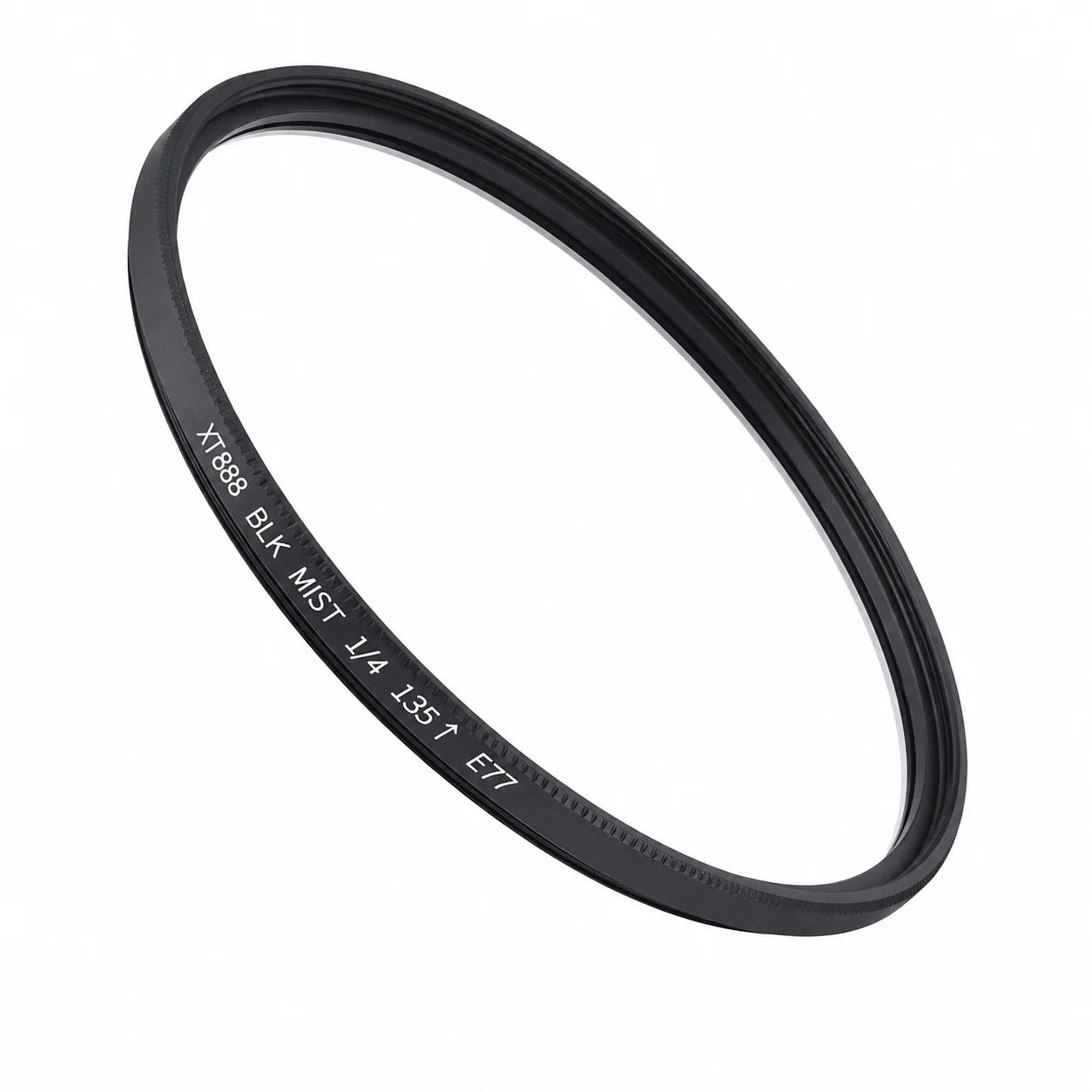
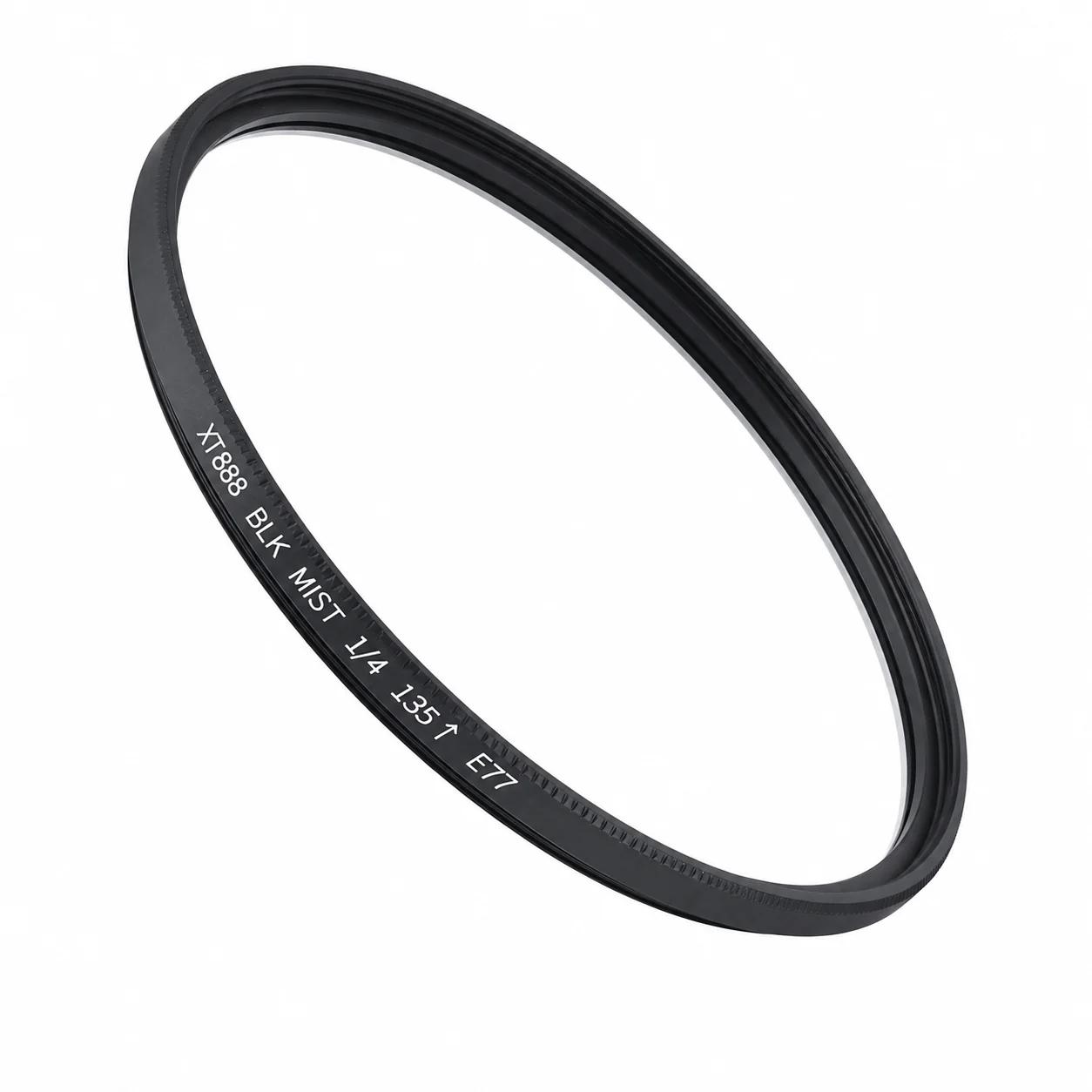
- XT888 135 Bottom 1/4: the entry mist, tuned for atmosphere over maximum sharpness, sized 39mm to 105mm, including the 39mm Leica/Fuji threads and the 49mm size for the Leica Q3 43. Average transmission is listed at ≈88.8% with ≈0.3% reflectance from 28–36 coating layers per side. This is the one I'd tell most people to start with.
- XT888 135 Top: still rated in the 1/4 family, but its diffusion sits between 1/8 and 1/4, with detail as the priority. If your real worry is "I don't want it to look soft," this is the closest thing we have to a 1/8. It only comes in 49–82mm, black frame.
- XT925: a 1/4 aimed at night portraits and mid-to-long lenses, with ≈0.1% reflectance from 36–48 coating layers per side. That lower reflectance matters most when there are lamps or neon in frame, because it cuts down the extra flare a filter can add on top of the glow you actually wanted. Sizes run 39mm to 112mm.
If you want the case for picking by scene (daytime streets, portraits, night lights), I went through that in The Black Mist Strength You Can Leave On All Day and, for skin specifically, in A Softer Black Mist for Portraits, Not Night Lights. This post is narrower: if the only choice on your mind is 1/8 against 1/4, here's why I'd start on 1/4.
A quick way to decide
Ask yourself what you'll do the first week. If you'll mostly shoot evenings, street lights, backlit people, window light: a 1/4 will show you the look, and a 1/8 may not. If you'll shoot daylight product or client work and can't afford a lifted shadow: buy a 1/8 from someone who makes one, or skip mist for that job.
And if you go with the 1/4 and find there are frames where you don't want the glow at all, just take it off for those. That's normal, not a sign you bought wrong.
— Leo Liang