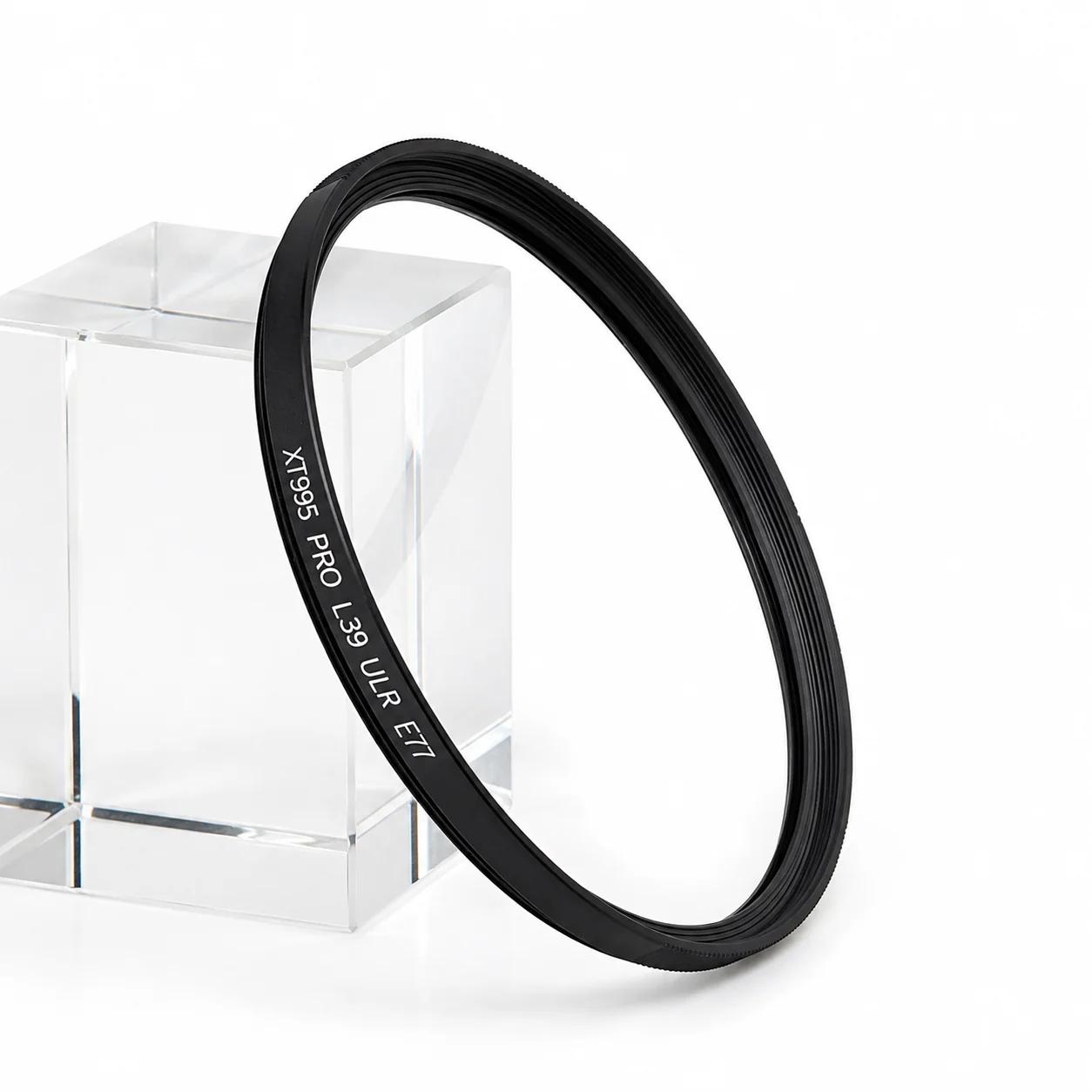
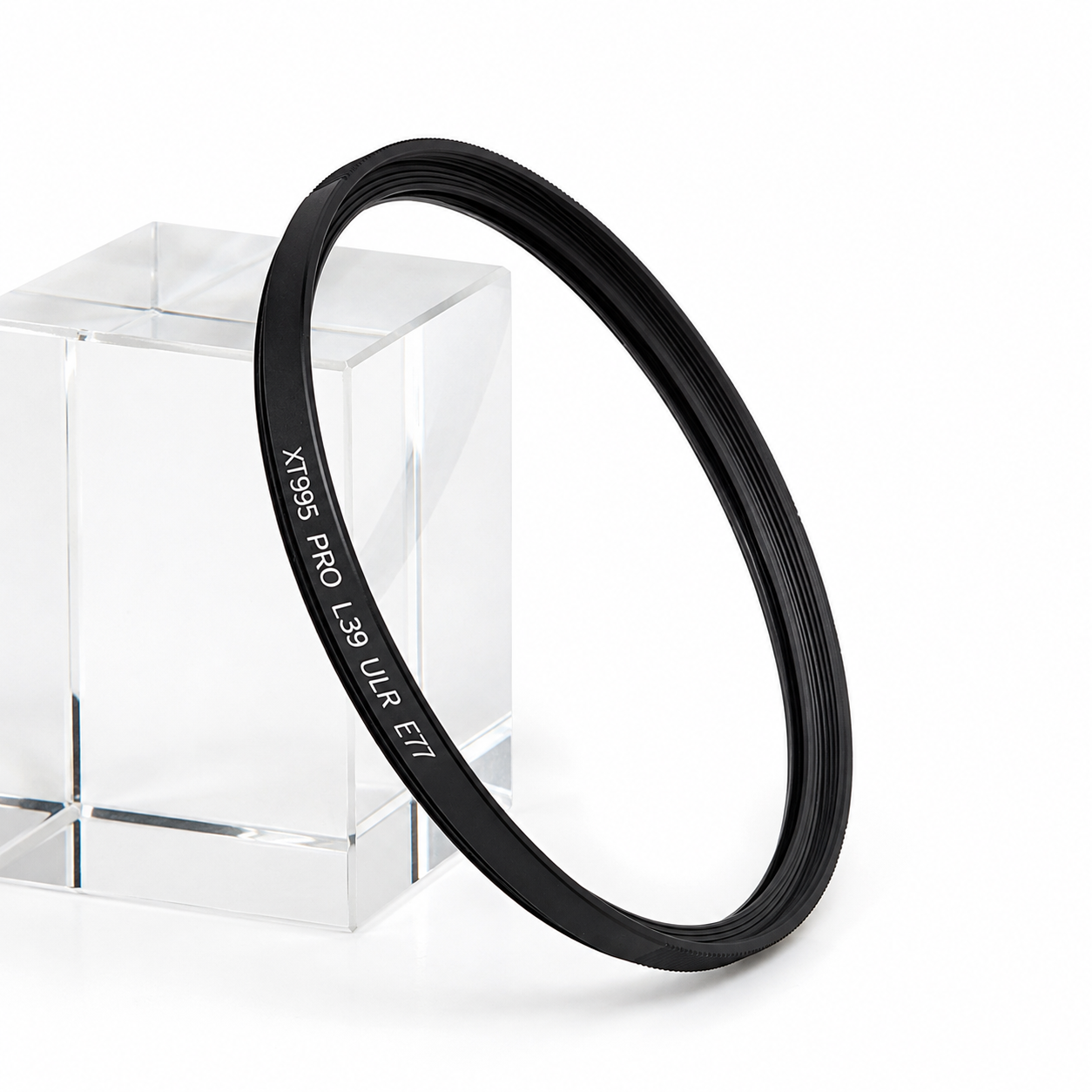
A slim filter is not the better filter. It is the thinner one, and thin only pays off in three situations: the factory hood has to screw back on over the glass, you are stacking two filters, or you shoot wide enough that the rim itself reaches the corners of the frame. On a 135mm at f/8 a regular ring costs you nothing. On a 28mm with a hood and a polarizer on top of a UV, a fat ring costs you the shot.
That is the whole decision. The rest is how to tell which of those three you are in.
The frame is the part that matters
Glass gets the attention. Frame thickness is what changes the picture.
A filter ring sits in front of the front element and stands proud of the barrel by however many millimetres the maker spent on it. On a long lens the light arrives almost straight, and nothing near the edge of the image circle is anywhere close to that ring. On a wide lens the rays at the corners come in at a steep angle, and the ring starts to block them before the glass does. The corner goes dark because something is in the way, not because the coating is bad.
Then the hood adds the second half of the problem. A screw-in hood has to clear the outside of whatever is on the thread and still reach its own stop. Every millimetre of filter frame is a millimetre the hood cannot travel. On a hood designed around a bare rim, that is often the difference between locking and sitting crooked.
Three cases where slim is the right buy
The original hood has to go back on. Mostly a rangefinder problem. A classic Leica or Voigtländer hood was cut for the bare lens rim; screw a fat ring on and the hood bottoms out against the filter's bezel instead of seating in the lens groove. We went through that fit in detail in Keep the Hood On. The short version: the frame has to be genuinely slim, not marketing slim.
You are stacking. Two filters is two frames. A polarizer in front of a UV, or a 1/4 mist in front of a polarizer, adds the depth of both rings at once, and the stack is what the corners and the hood see. One regular ring is fine. Two regular rings on a 24mm is where the corners start to go.
You shoot wide. Somewhere around 28mm on full frame the rim starts to be part of the optical path. A slim ring gives back a little corner light and a little hood clearance, and occasionally that is the difference between a frame that works and one that does not.
If you are choosing between screwing a filter on and switching to magnets because of the hood, that comparison has its own post: Screw-in vs Magnetic Filters and the Hood.
When a regular ring is the better buy
Most of the time.
Shoot long, stop down, keep one filter on the lens, and use a hood that bays onto the barrel instead of the thread — the thickness never shows. What does show is the handling. A regular ring has deeper threads and more surface to grip, which matters on a cold day with a lens whose female thread is shallow. Slim rings have less thread depth by design. They cross-thread sooner and they bind sooner, and a slim ring stuck on a lens is a worse afternoon than a chunky one ever was.
So treat a slim ring as a specialty part, not an upgrade. Buying one for a 70-200 is paying for millimetres that never enter the frame.
Stacking, and the order to screw them in
Decide the order once. The polarizer has to rotate, so it should be the one you can reach — normally it goes on the lens first, with the other filter in front of it. Put the polarizer on the outside of the stack and you will be turning the whole sandwich, loosening both rings as you hunt for the angle.
Two slim rings stack to about the depth of one regular ring. That is why the combination is worth the extra cost. Two regular rings plus a screw-in hood on top is the setup that makes people believe their lens has a vignetting problem.
What we make
The XT995 PRO L39 is the slim one: 37–82mm in a slim black frame, with the 39mm machined as a custom slim frame so the Leica and Voigtländer hoods clip back over it. If your lens is 39mm and the hood has to stay on, that is the part.
The numbers, and what they mean: average transmission ≈99.5%, so the filter is not something you meter around. Average reflectance ≈0.12%–0.15%, low enough that a street lamp does not throw a second image back at the sensor. A 390nm cutoff, which is where UV haze gets stopped. B270 glass with 36–48 layers on both sides, so the coating is even across the whole surface instead of just the middle.
The XT996 PRO is the same idea with the thread cut for a specific camera rather than stretched across a range: 34mm, 39mm for Fuji, 39mm and 46mm for Leica, 49mm for the Q3 43, up to 105mm. ≈99.6% transmission and ≈0.08% average reflectance.
Either way, order the millimetre printed next to the ø on the front ring. The size on the lens decides, not the focal length — how to find it takes about a minute.
Any filter can come back within 30 days — no restocking fee. Every XT filter also carries a 12-month warranty against manufacturing defects. Orders over $99 ship free; under that, standard shipping is $8.
— Leo Liang