If the factory hood has to stay on, screw-in wins. Magnetic systems are genuinely fast, and that speed is the whole reason they exist. But the speed is not free: the glass cannot grip a thread, so something has to, and that something is another ring sitting in front of your lens. On a Leica or a Voigtländer with a thin metal hood, that ring is exactly what has no room to go.
I've used both kinds of system, and the difference I keep running into is not the glass. It is how many rings end up between the front element and the subject.
For the questions that come to me most often, it comes down to three things: whether the original hood still goes on, what the extra millimetres cost you at close focus, and how often you really swap filters.
What a magnet has to hold on to
A screw-in filter threads straight onto the lens. One part, one motion, and the glass sits on the front element with nothing else in the way.
In a magnetic system the glass attaches to a base ring instead of to the lens thread. That base ring is threaded, so it screws on like any other filter, and then the magnet holds the filter to it. You still have a threaded ring in the stack. The difference is that now there are two pieces where a screw-in filter had one.
The payoff is real: no cross-threading, no lining the filter up with the thread in bad light, and a swap you can do with one hand while you are already looking through the viewfinder. On a body where you are constantly changing glass, that is worth a lot.
The X100 is a good illustration of how the stack grows. Any filter on an X100 already means removing the front trim ring and adding an adapter that steps out to 49mm. Magnetic does not skip that step — it puts the magnetic base ring on top of it.
The hood decides most of it
A screw-in hood has an inner thread, and that thread has to clear the outside of whatever filter ring is on the lens. Make the ring fat and the hood stops short of its stop. It either sits crooked on the thread or refuses to go on at all, and then it is either dangling off the side or sitting in your bag.
The 39mm Leica and Voigtländer primes are where this bites hardest, because their factory hoods were sized for a bare rim. A slim filter frame still lets the hood lock. We wrote about that fit in detail in Keep the Hood On: Slim UV for Leica and Voigtlander — the short version is that the frame has to be thin, not just the glass.
Thread size changes the answer for the same reason, and bodies are not interchangeable here. The Q3 43 takes a 49mm thread, the official E49, and its square factory hood is tight around it. A generic 49mm ring can stop that hood from seating, and it can cost you macro distance at the same time. Our 49mm for the Q3 43 is cut for that body. Whether it keeps the square hood and full macro distance together is a measurement we have not made yet, so I am not going to promise you both.
The X100 is the same lesson in reverse: it has no native filter thread at all, so a 39mm filter is simply the wrong size for it, magnetic or otherwise. We mapped the threads here — Leica 39mm vs 46mm vs Q3 49mm and Fuji X100 filter thread is 49mm.
The millimetres you do not see
A filter ring becomes the closest thing to your subject. On a close-focusing setup, every millimetre of that ring is a millimetre of working distance handed over before the front element gets anywhere near the thing you are photographing.
Down a street at 1/60th, you will never notice. Filling a frame with a beetle, a pastry, or a watch face, you will notice it immediately. This is the part that quietly decides the argument for a slim frame, and it is why adding a second ring on top of a magnetic base is not free even on a body where the hood fits perfectly.
How often you actually swap
This is the honest case for magnetic, and it is a good one for some people. If you are changing filters several times an hour — a polarizer onto a window, off again, a clear back on for the street — the one-motion swap earns its extra part every single time. No threads to line up, nothing to twist off two hands at once, no filter put down on a wet pavement while you find the thread.
If you shoot one setup and leave the filter on for the day, that advantage is worth exactly nothing, and all you notice is the ring.
What we make, and why it is screw-in
We build screw-in. There is no magnetic system in the XT Filters line, and that is not a moral position about magnets — it is a decision about which part of the stack we are willing to ask you to carry.
The XT995 PRO L39 Black UV runs 37–82mm, with the 39mm machined as a slim frame on purpose so the Leica and Voigtländer hoods still clip over it. $44.99–$89.99.
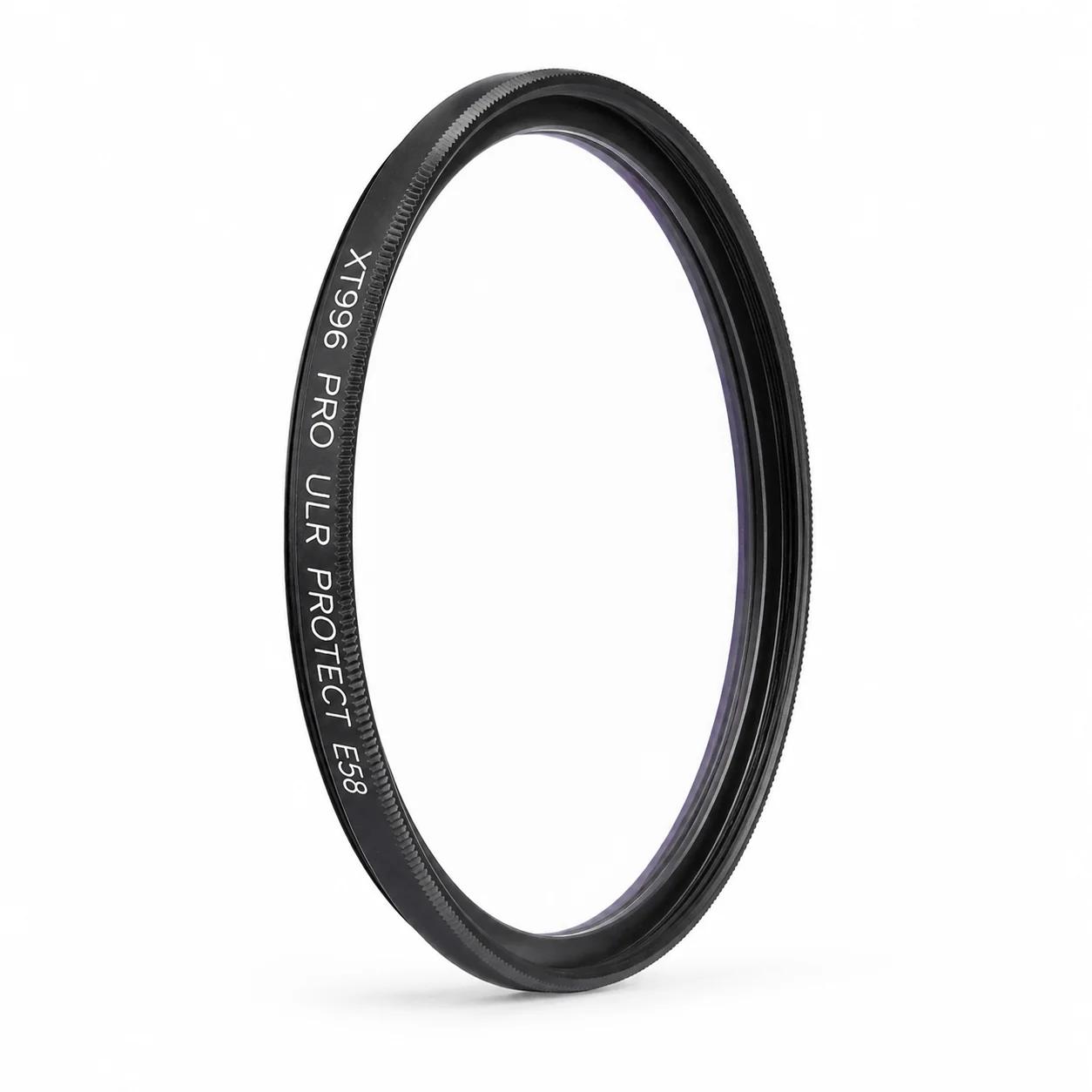
The XT996 PRO Black Frame is the one to look at if your body is on the list: 34mm, 39mm Fuji, 39mm and 46mm Leica, 49mm for the Q3 43, and sizes up to 105mm. The thread is cut for that camera, not for a one-size-fits-all crowd. $64.99–$179.99.
Optically, the XT996 PRO passes ≈99.6% of the light through, a loss small enough that you will never meter around it. Its average reflectance is ≈0.08%, so very little comes back off the front surface toward the sensor — that is where flare and veiling haze start. The coating runs 36–48 layers on each face, so there is no untreated side of the glass to bounce light back at you.
Stay screw-in slim, and buy the thread your body actually takes. The size is printed on the front ring of the lens next to the ø mark — how to read it takes about a minute.
— Leo Liang