
I don’t think most photographers need a drawer full of ND filters. That is probably not the best way to start this article, since I run a filter company. But it is true.
A good ND filter solves a specific problem: there is too much light, and you do not want to change the creative choice you already made. You want to keep the aperture open. Or keep a natural shutter speed for video. Or turn moving water into something softer than a frozen splash.
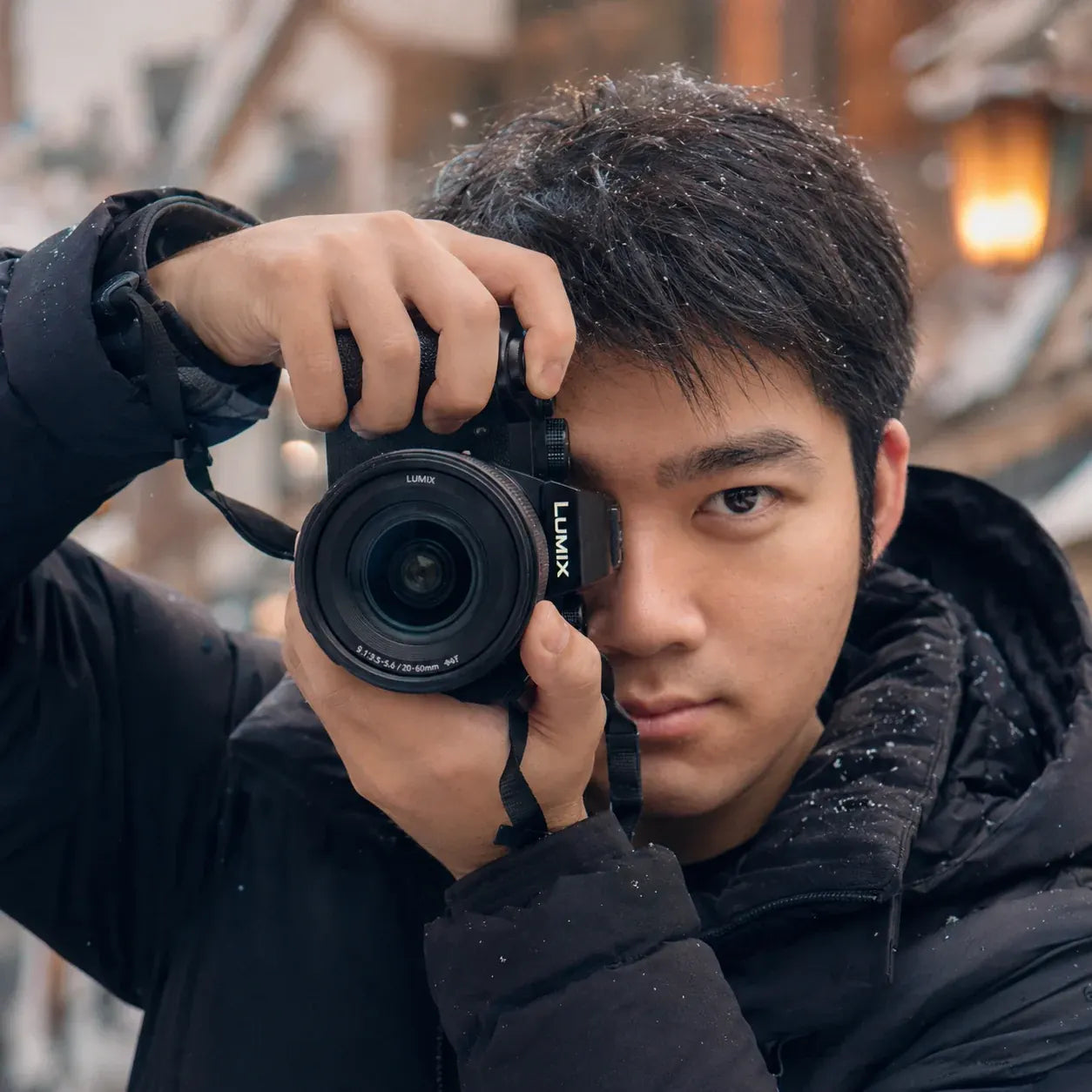
I’m Leo Liang, founder of XT Filters. I shoot with a Panasonic Lumix GH7 and an OM SYSTEM M.Zuiko Digital ED 12–40mm f/2.8 PRO II. It is a compact setup, and I like it that way. Panasonic lists this lens as compatible with the GH7 in its official compatibility guide. The combination has taught me something simple: small gear still needs sensible accessories. An ND filter is one of them. Just not all the time.
First: what an ND filter actually does
An ND, or neutral density, filter reduces the light entering your lens. In theory, it should not change the color of the scene. It is basically sunglasses for your camera, except the goal is not to make the image darker. The goal is to let you use a slower shutter speed, a wider aperture, or both.
Maybe you are outside at noon and want to shoot at f/2.8 for softer background separation. Without an ND filter, your shutter speed may become absurdly fast. That can be fine for stills. For video, though, it often gives motion a hard, choppy look.
Photography Life explains the basic idea well in its ND filter guide: ND filters reduce exposure without being intended to alter the scene’s color. That last part matters. If a filter makes every shadow green or every highlight warm, it is not doing its quiet little job very well.
When I actually reach for one
For video, I use ND more than anything else. On the GH7, I usually start around the familiar 180-degree shutter idea: roughly 1/50 sec for 24 fps, or 1/120 sec for 60 fps. It is not a law. Sometimes I break it. But it is a useful starting point, and daylight quickly becomes too bright for it.
I also use ND filters for three still-photo situations:
- Waterfalls and moving water. A slower shutter can turn busy water into a smoother shape. I do not always want the full milky-river look, though. A little movement often looks more honest.
- Bright portraits. If I want to keep f/2.8 outdoors, a 3- or 4-stop ND gives me room to do that without forcing a tiny aperture.
- Long exposures in daylight. Clouds, crowds, waves, traffic. This is where a strong ND becomes fun, but it also becomes less forgiving.
My mild bias: buy an ND filter for a real shooting habit, not for the idea of being a photographer who owns filters. If you mostly take travel photos in decent light at f/5.6, you may not need one yet. A CPL might make more sense.
How many stops do you need?
The names look more confusing than they are. Each stop cuts the light in half.
| Filter | Light reduction | When I would use it |
|---|---|---|
| ND2 | 1 stop | Small exposure adjustment, bright overcast days |
| ND4 | 2 stops | Still photography with a slightly wider aperture |
| ND8 | 3 stops | Portraits outside, gentle video control |
| ND16 | 4 stops | My practical daytime starting point |
| ND32 | 5 stops | Bright sun, video at f/2.8 |
| ND64 | 6 stops | Strong midday light, common for video |
| ND1000 | About 10 stops | Deliberate long exposures in daylight |
If you only want one fixed ND filter, I would usually start with ND16 or ND32. They are useful without being too extreme. A 10-stop filter gets more attention online because the results can look dramatic, but I would not call it the best first purchase. It is slower to work with, composition gets harder, and exposure mistakes become more obvious.
For my own GH7 setup, an ND32 is often enough when I am filming outside with the 12–40mm at f/2.8. On a very bright day, ND64 makes life easier. Your light, sensor size, frame rate, and taste will be different. That is normal.
Fixed ND, variable ND, or magnetic ND?
A fixed ND has one density. ND16 stays ND16. It is the option I trust most for image quality because there are fewer compromises. The downside is obvious: you may need to carry more than one.
A variable ND lets you rotate the filter and adjust the density. For solo video work, that is genuinely convenient. I am not anti-variable-ND. I just think buyers should know the trade-off. At very strong settings, especially on wider lenses, some variable filters can produce uneven darkening or the dreaded X pattern. The better ones handle this better, but physics is still physics.
A magnetic ND system is about speed. Pop it on, pull it off, move to the next shot. I like magnetic filters when I am walking, filming, and not interested in slowly threading filters while the light disappears. Just make sure the adapter ring matches your lens thread and that the filter system is designed to stack safely if you plan to add a CPL.
The 12–40mm f/2.8 PRO II uses a 62mm front filter thread, so that is the size I buy for it. Do not guess your filter size from focal length or from the diameter of the lens barrel. Look for the small ø symbol on the lens, check the manufacturer page, then buy the matching size. It is a boring check that saves money.
A few mistakes I made so you do not have to
I bought a cheap strong ND years ago because I wanted long exposures immediately. It worked, technically. But the color shift was annoying, and correcting every image later was not the creative experience I imagined.
I have also stacked filters when I should not have. On a wide lens, stacking can introduce vignetting. Sometimes it is minor. Sometimes you notice it only after you get home, which is a terrible time to discover a dark ring around a sky.
And please clean the filter. This sounds too basic to mention, but an oily fingerprint on the front of an ND filter can make bright highlights look strangely soft. I have ruined enough clips this way.
My simple recommendation
Start with the way you shoot.
If you make video outdoors, choose a quality variable ND or a small fixed set around ND16, ND32, and ND64. If you mainly photograph waterfalls, coastlines, or city scenes, add a 6-stop or 10-stop fixed ND later. If you want shallow-depth-of-field portraits in hard daylight, a 3- or 4-stop filter may be all you need.
Do not chase the darkest filter. Chase control.
At XT Filters, I would rather help someone buy one useful filter than three that stay in a bag. Check your lens thread size first, then explore ND filters by compatibility. If you are unsure, send us the camera and lens you use. A short question before buying is better than a return after.
About the author: Leo Liang is the founder of XT Filters and writes about practical camera filters for photographers and small video creators. He shoots with a Panasonic Lumix GH7 and OM SYSTEM M.Zuiko Digital ED 12–40mm f/2.8 PRO II lens, usually with less gear than he originally planned to bring.
Shop our filters
Explore the full XT filter collection — CPL, black mist, UV and lens protection for photographers who demand clean color.
SHOP NOW →