Yes — if the lens is expensive and you carry it hard, put a UV protection lens filter on it. On a modern digital camera that filter is mostly a sacrificial front plate, not a haze fixer. A well-coated one should leave the picture alone; a cheap uncoated one can add flare. Do not expect it to save a drop onto concrete.
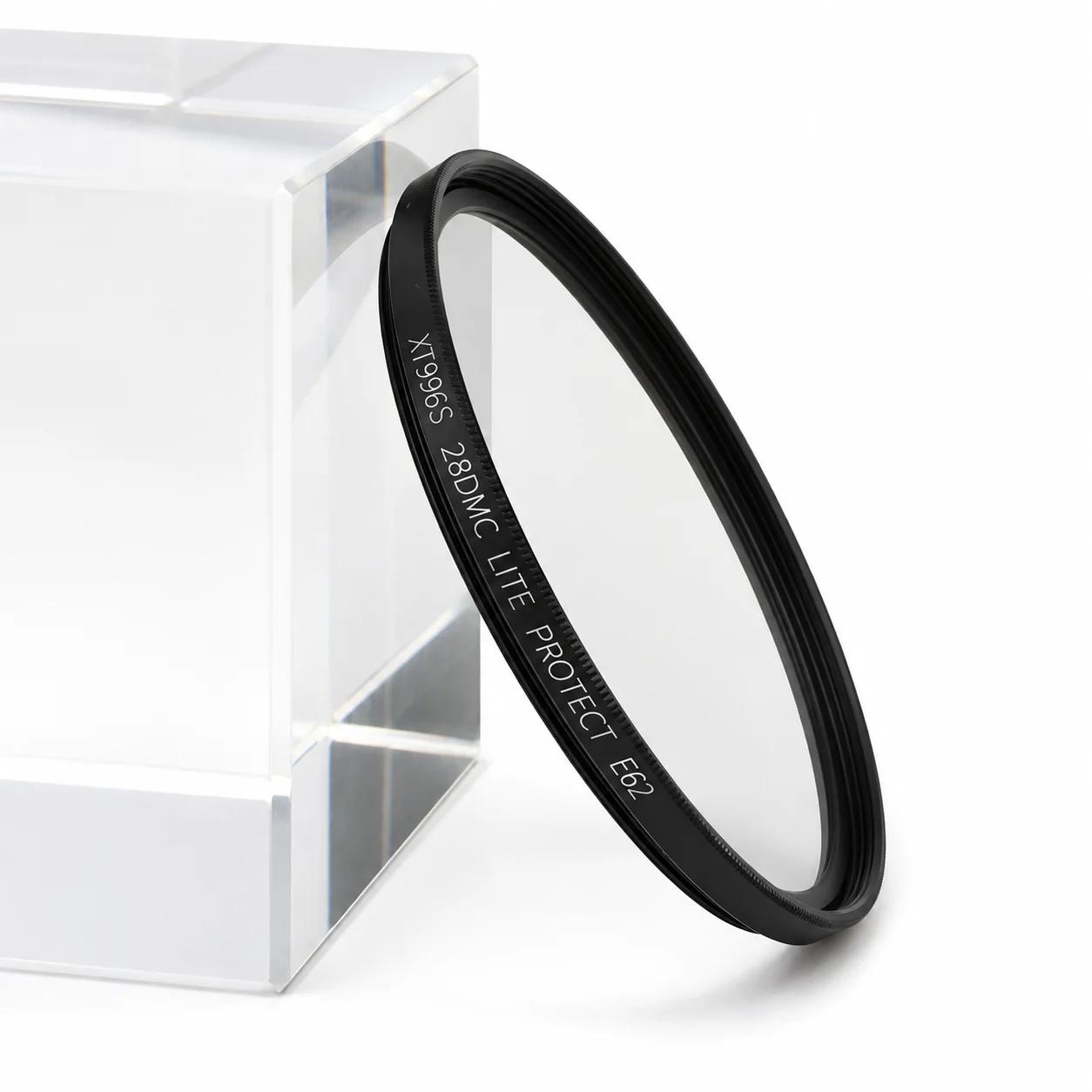
I'm Leo Liang. I run XT Filters. On my own street kit — Panasonic GH7 with the OM System 12-40mm f/2.8 PRO II — I've kept our XT996S Lens Protection Filter mounted since March 2025. I haven't seen a visible image-quality hit with it on. At evening seaside shoots it takes the salt haze and fingerprints instead of the front element. The lens rubs my bag sometimes; with the XT996S on I don't worry about that glass. Sometimes I forget the lens cap and I'm still fine.
What a protection lens filter actually protects against
A screw-in protector sits between the world and the coated front element. What it reliably catches:
- Scratches from grit, keys, or a zipper
- Fingerprints and skin oil
- Salt spray and light rain film
- Dust that would otherwise smear the coating
What it does not do: stop a drop. Glass is still glass. If the kit hits pavement, the filter may crack — that is the sacrificial part — but the lens barrel, mount, and internals take the same impact. Don't buy a UV protection lens filter as insurance against falling.
One honesty note from seaside work: the 12-40 PRO II is an external-zoom design. A filter does not seal sand out of the body or the zoom barrels. It protects the front glass. Sand in the mechanism is a different problem.
The image-quality argument, without the marketing fog
People ask "does a UV filter reduce image quality?" The honest answer is: it can, if the glass and coatings are weak. Flat glass in front of a curved multi-coated element adds two new surfaces. Under streetlights, sun in the frame, or headlights, those surfaces can bounce light back into the lens and show up as ghosts, flare rings, or lifted blacks.
So the criteria that matter for a protection lens filter are transmission and reflectance — not the word "UV" printed on the box.
Both of our protectors list average transmission ≈99.6%, so exposure does not change in practice. The step that separates them is reflectance:
- XT996S: double-sided 28-layer multi-coating, average reflectance ≤0.25%. Everyday clear barrier; does not shift color. This is the one on my 12-40.
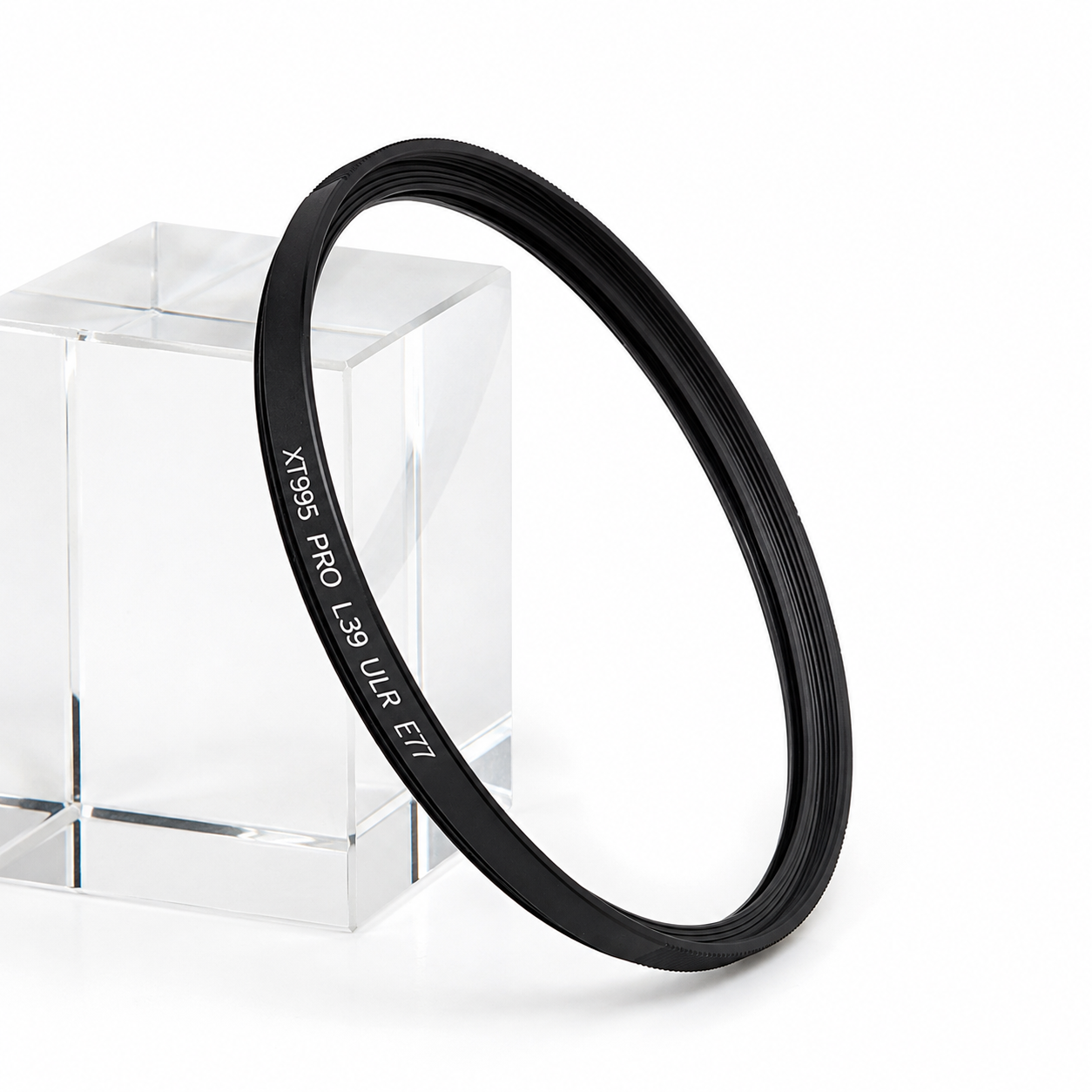
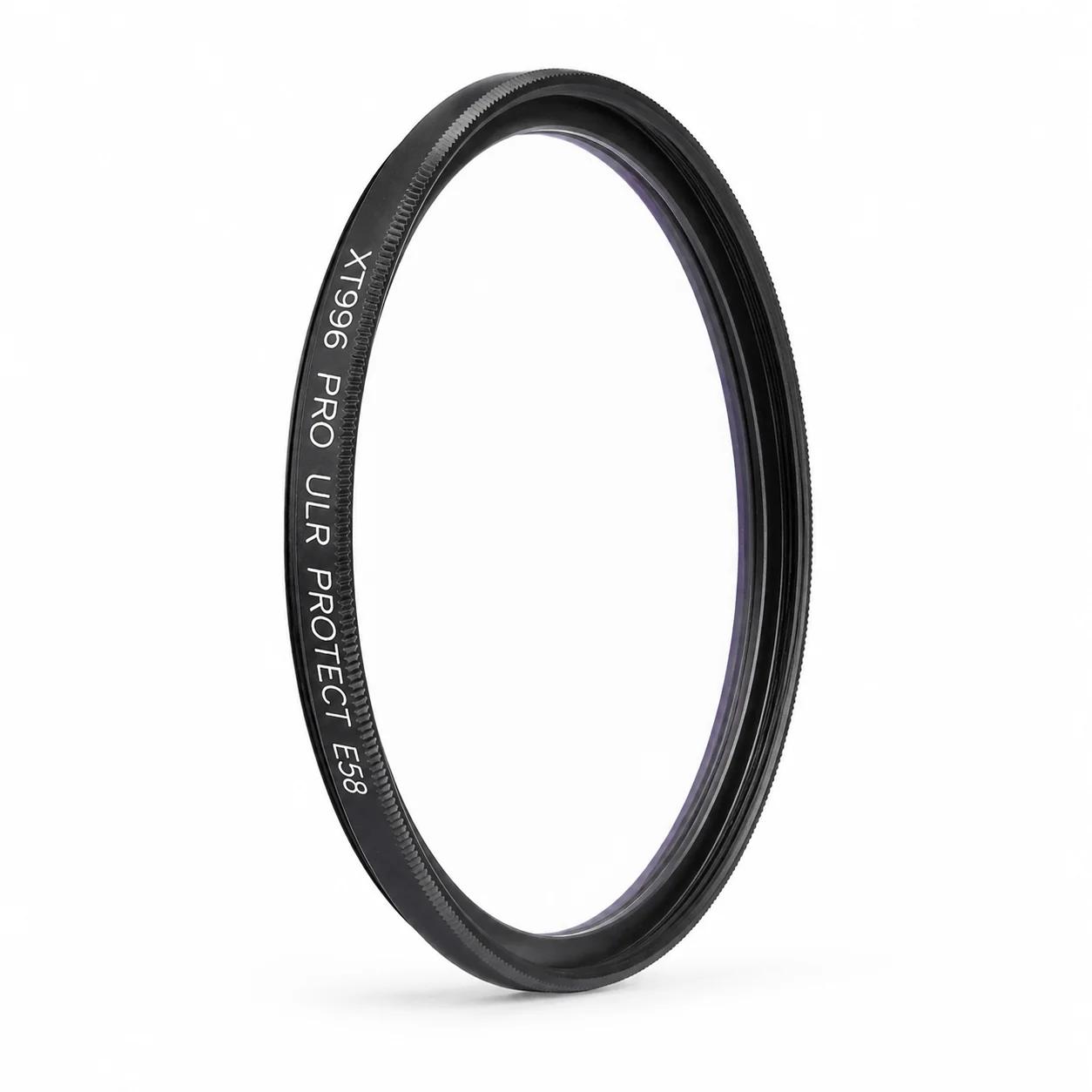
- XT996 PRO Black Frame: double-sided 36–48 layer multi-coating, average reflectance ≈0.08%, dust-/water-/scratch-resistant build. Costs more. Reach for it when bright sources sit in or near the frame and you want the lower bounce.
I am not claiming zero flare on every lens under every backlight. I am saying: buy coatings, not the mythology that any clear glass is free.
Do you need UV, or is clear enough?
On film, UV haze in distant landscapes was a real problem, and UV filters earned their job. Digital cameras already put a filter stack over the sensor that cuts most UV and infrared. On a mirrorless body, a screw-in UV ring barely changes haze. In practice a UV filter and a clear protector do the same daily job: they take the abuse so the front element does not.
If you want the short UV-versus-clear breakdown we already published, read UV Filter vs Clear Filter. This piece is the other question: whether you need a protector at all on glass you care about.
FAQ: Is a UV filter the same as a protection lens filter?
Almost, on digital. Marketing still prints "UV" because the name stuck. Optically, on a digital body a modern UV protection lens filter behaves like a clear protector with coatings. Shop it as protection. Check the millimetre stamped on your lens barrel (ø67, ø77, ø82…), order that size, and put one filter on at a time — stacking a protector under a polarizer only adds more surfaces.
Who should skip one
Skip a filter if you only shoot controlled studio work under soft lights and always cap the lens between setups. Skip a thick frame on a very wide lens if you have already seen corner intrusion with stacked glass. And skip any filter sold on "anti-fall" promises — that claim is not what these rings do.
For everyone else carrying a paid-for lens through streets, beaches, or bags: a coated UV protection lens filter is cheap insurance for scratches and spray, not for drops. Read the thread size on the barrel, then pick XT996S for everyday clear protection or XT996 PRO when you want the lower reflectance.
— Leo Liang